

Introduction
Heavy duty doors are essential components in industrial facilities, commercial buildings and high-security environments. Unlike standard doors designed for everyday use, heavy duty doors are engineered to withstand frequent operation, harsh conditions, heavy impacts and increased security demands. From warehouses and manufacturing plants to logistics centers and specialized facilities, selecting the right door system can significantly affect safety, operational efficiency and long-term maintenance costs.
Understanding the different types of heavy duty doors, material options and performance requirements can help businesses make better purchasing decisions and ensure reliable operation for years to come.
Table of Contents
- What Is a Heavy Duty Door and Why Is It Important?
- What Types of Heavy Duty Doors Are Available?
- Where Are Heavy Duty Doors Commonly Used?
- How Do You Choose the Right Heavy Duty Door?
- What Factors Affect Heavy Duty Door Performance?
- How Much Does a Heavy Duty Door Cost?
- What Are the Latest Trends in Heavy Duty Door Technology?
- Conclusion
- FAQ
Section One: What Is a Heavy Duty Door and Why Is It Important?
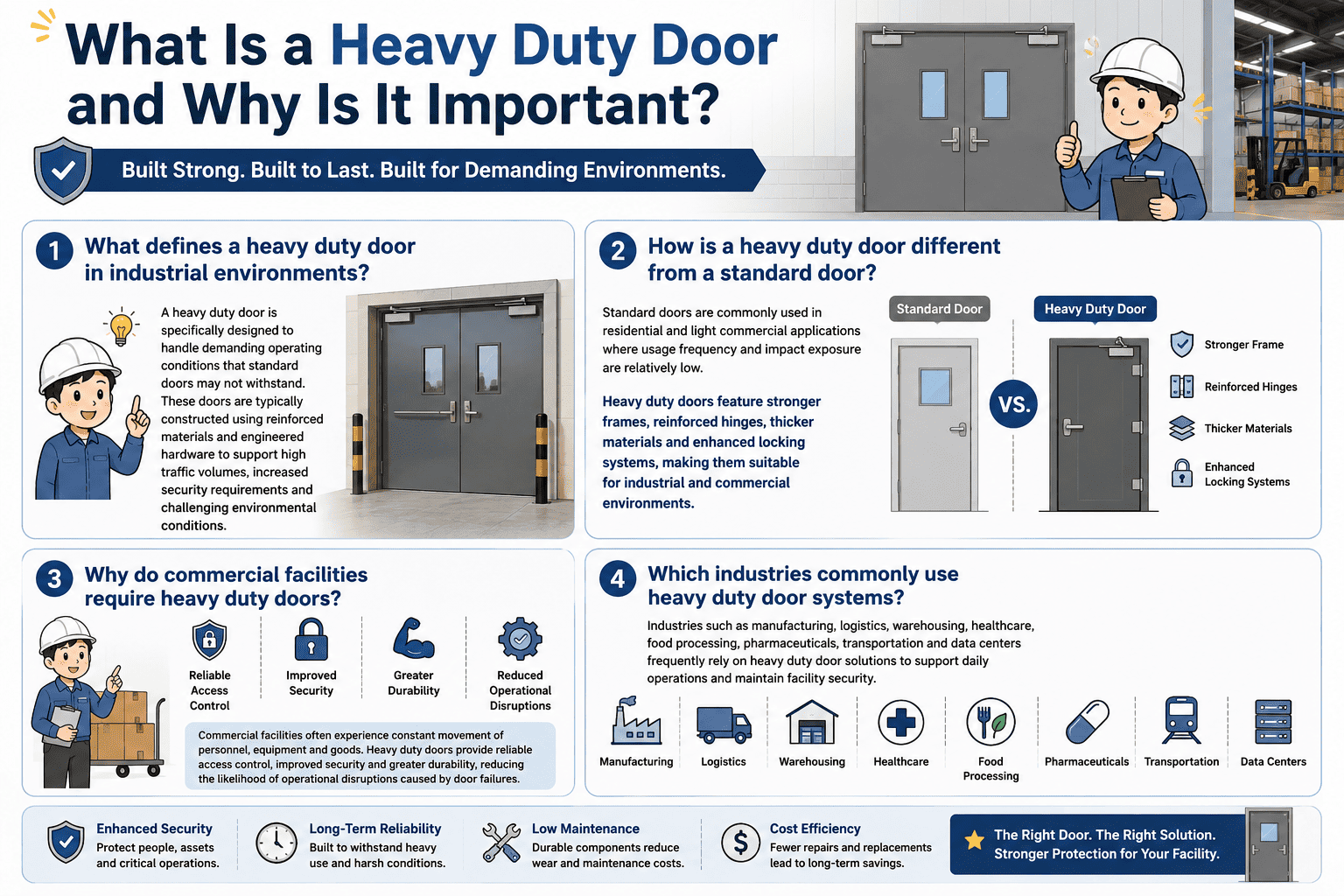
What defines a heavy duty door in industrial environments?
A heavy duty door is specifically designed to handle demanding operating conditions that standard doors may not withstand. These doors are typically constructed using reinforced materials and engineered hardware to support high traffic volumes, increased security requirements and challenging environmental conditions.
How is a heavy duty door different from a standard door?
Standard doors are commonly used in residential and light commercial applications where usage frequency and impact exposure are relatively low. Heavy duty doors feature stronger frames, reinforced hinges, thicker materials and enhanced locking systems, making them suitable for industrial and commercial environments.
Why do commercial facilities require heavy duty doors?
Commercial facilities often experience constant movement of personnel, equipment and goods. Heavy duty doors provide reliable access control, improved security and greater durability, reducing the likelihood of operational disruptions caused by door failures.
Which industries commonly use heavy duty door systems?
Industries such as manufacturing, logistics, warehousing, healthcare, food processing, pharmaceuticals, transportation and data centers frequently rely on heavy duty door solutions to support daily operations and maintain facility security.
Section Two: What Types of Heavy Duty Doors Are Available?
Heavy duty steel doors and their advantages
Heavy duty steel doors are among the most widely used industrial door types. They offer excellent strength, impact resistance and security, making them suitable for warehouses, factories and commercial buildings where durability is a top priority.
Fire-rated heavy duty doors explained
Fire-rated heavy duty doors are designed to help contain fire and smoke within designated areas. These doors are commonly installed in commercial buildings, industrial facilities and public spaces where fire safety regulations must be met.
Sliding, rolling and hinged industrial doors compared
Sliding doors are ideal for locations with limited swing space, while rolling doors maximize opening efficiency in warehouses and loading docks. Hinged heavy duty doors remain popular for personnel access points and controlled entry locations.
Which heavy duty door design suits different applications?
The most suitable door design depends on factors such as traffic volume, available space, security requirements and environmental conditions. Facilities often select door types based on operational workflow and building layout.
Section Three: Where Are Heavy Duty Doors Commonly Used?
Warehouses and logistics centers door requirements
Warehouses and distribution centers require durable door systems that can accommodate frequent loading and unloading activities while maintaining security and operational efficiency.
Manufacturing plants and factory facility applications
Industrial facilities often utilize heavy duty doors to separate production areas, protect equipment and control access between operational zones.
Commercial buildings and security-focused environments
Office buildings, retail facilities and secured properties frequently use heavy duty doors to improve access control and protect valuable assets.
Heavy duty doors for cleanrooms and specialized facilities
Specialized environments such as cleanrooms, laboratories and pharmaceutical facilities may require heavy duty doors designed to meet hygiene, contamination control and environmental management standards.
Section Four: How Do You Choose the Right Heavy Duty Door?
Why material selection is critical for door performance
Door materials directly affect strength, corrosion resistance, maintenance requirements and overall lifespan. Steel, aluminum and composite materials each offer unique advantages depending on the application.
How to evaluate durability and impact resistance
Facilities should consider expected traffic levels, equipment movement and potential impact exposure when selecting a door. Higher durability ratings often translate into lower long-term maintenance costs.
What role does insulation play in door selection?
Insulated heavy duty doors help improve energy efficiency by reducing temperature transfer. This can be particularly beneficial for climate-controlled facilities and temperature-sensitive operations.
Security and access control considerations for industrial doors
Security features such as reinforced locking systems, electronic access controls and integrated monitoring solutions can enhance facility protection and support operational management.
Section Five: What Factors Affect Heavy Duty Door Performance?
How weather conditions influence door lifespan
Exposure to moisture, temperature fluctuations, UV radiation and corrosive environments can impact door performance over time. Selecting weather-resistant materials helps extend service life.
Why proper installation is important for durability
Even high-quality doors may experience premature wear if installed incorrectly. Proper alignment, anchoring and hardware installation are essential for long-term reliability.
Common causes of heavy duty door failure
Door failures can result from excessive impact, poor maintenance, hardware wear, environmental exposure or improper operation. Regular inspections help identify issues before they become serious problems.
How maintenance impacts long-term performance
Routine maintenance including lubrication, hardware inspection and alignment checks can significantly improve operational reliability and extend equipment lifespan.
Section Six: How Much Does a Heavy Duty Door Cost?
Factors that influence heavy duty door pricing
Door pricing varies depending on material selection, dimensions, performance specifications, security features and customization requirements.
Material, size and customization cost differences
Larger doors, specialized finishes and custom engineering solutions generally increase project costs. Fire-rated and security-enhanced models may also require additional investment.
Installation and maintenance cost considerations
Beyond the purchase price, installation complexity and long-term maintenance requirements should be included when evaluating total ownership costs.
How to evaluate the value of a heavy duty door investment
Rather than focusing solely on initial cost, businesses should consider durability, maintenance savings, energy efficiency and expected service life when assessing overall value.
Section Seven: What Are the Latest Trends in Heavy Duty Door Technology?
Smart access control and automated door systems
Modern heavy duty doors increasingly integrate with electronic access control systems, enabling improved security management and operational efficiency.
Energy-efficient industrial door solutions
Energy-saving designs, improved insulation materials and faster operating mechanisms help facilities reduce energy consumption and environmental impact.
Advanced security features for commercial facilities
Enhanced locking technologies, remote monitoring capabilities and integrated security systems are becoming standard features in many commercial door applications.
Future developments in heavy duty door manufacturing
Manufacturers continue to develop stronger materials, smarter automation technologies and more sustainable production methods to meet evolving industry requirements.
Conclusion
Heavy duty doors play a critical role in industrial, commercial and high-security environments. Choosing the right door requires careful evaluation of durability, materials, security features and operational requirements. By selecting a heavy duty door that matches the facility's needs, businesses can improve safety, efficiency and long-term operational reliability.
FAQ
Q:What is a heavy duty door?
A:A heavy duty door is a reinforced door designed for industrial, commercial or high-traffic environments where durability, security and long-term performance are essential.
Q:What materials are commonly used for heavy duty doors?
A:Common materials include steel, stainless steel, aluminum and specialized composite materials, depending on the application and environmental conditions.
Q:Are heavy duty doors suitable for industrial facilities?
A:Yes. Heavy duty doors are widely used in warehouses, manufacturing plants, logistics centers and other industrial environments due to their durability and security benefits.
Q:How long does a heavy duty door typically last?
A:Service life depends on material quality, operating conditions, installation quality and maintenance practices, but many systems can provide reliable performance for years when properly maintained.
Q:What factors affect heavy duty door pricing?
A:Pricing is influenced by door size, material selection, fire ratings, security features, customization requirements and installation complexity.
Q:How do I choose the right heavy duty door for my facility?
A:Evaluate operational requirements, environmental conditions, security needs, traffic volume and long-term maintenance considerations to identify the most suitable solution.